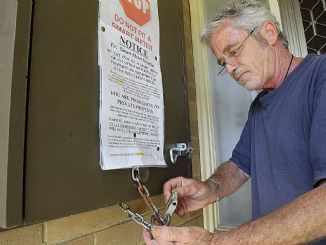
Smart meters, but at whose expense?

THE introduction of smart meters in Victoria may have been a costly exercise  for consumers but it has proven an impressive money spinner for a handful of  Australian entrepreneurs.

Cameron O’Reilly, the scion of the Heinz food empire and former chief of  media group APN, along with John B. Fairfax, the Smorgon family and Kerry Stokes  are a few of the high-profile names to have made a killing from the sale of  smart meters. They were major shareholders of Landis + Gyr, the company that  amassed about 56 per cent of the market in deals to supply the electricity  distributors in Victoria.

Their big payday came in 2011 when O’Reilly sold Landis + Gyr to Toshiba for  $US2.3 billion.

An investigation by BusinessDay has found Australians have been paying about  twice the amount for smart meters than consumers in the US and Europe. And there  has been poor transparency even though the metering devices had been mandated by  the government.

  That the costs of the implementation in Victoria have already blown out from  $800 million to $2.3 billion presents a salutary warning to New South Wales,  which is now deliberating on a rollout of its own, albeit optional.

The success of Landis + Gyr has confirmed Cameron O’Reilly as one of the most  savvy businessmen in Australia. The O’Reilly family had controlled regional  media group APN and just as the fortunes of old media were about to take a  battering last decade, O’Reilly was already moving deftly into a new space.

He started with Bayard Capital in 2002, garnering seed money from friends and  business acquaintances. Kerry Stokes and J.B. Fairfax pitched in $20 million  apiece, and the Smorgon family another $5 million. O’Reilly soon sold two-thirds  of his APN shares and chipped in a further $5 million.

He raised $100 million in seed capital, then Bayard went on a $1.5 billion  spending spree, acquiring Swiss metering company and industry leader Landis +  Gyr.  The Toshiba sale for $2.3 billion made Bayard’s seed investors a handsome  multiple of their investment, although it is only possible to piece together  estimates of profits from the public materials.

The Fairfax family would make about $203  million, through Marinya Holdings,  and the Smorgon family’s Escor Investments, $36 million.

John Curtis, the chairman of St George Bank made $24 million and the private  equity group Propel Investments about $405 million.

Propel and Curtis came on board through a series of capital raisings before  the Toshiba sale. Other shareholders in Bayard were Temasek Holdings, the  investment arm of the Singapore government, the former Lion Nathan chairman Doug  Myers and fashion designer Carla Zampatti. Once O’Reilly had acquired Email  Metering, the Enermet Group of Finland, Hunt Technologies and Cellnet  Technologies in the US, and Europe’s Landis + Gyr, Bayard was the No. 1 player  in the world market.

Not only did Landis + Gyr, to which Bayard then changed its name, dominate  Victoria but it also managed to fetch high prices for its devices, perhaps the  highest in the world.  Repeated efforts by BusinessDay to find relevant  information about smart meter prices and contracts have fallen on deaf ears.  ”Commercial in confidence” has been the response. Both government agencies and  distributors refused to provide details, although industry sources said  Australians have been charged twice as much as customers in other developed  markets.

According to eMeter Corporation, a meter data intelligence department of  Siemens, the average cost of smart meters sold to utility companies in the US is  $221, and in Europe $272. A spokesperson for the Australian Energy Regulator  (AER) confirmed the Victorian distribution companies paid an average of $346 to  their suppliers. Powercor paid the highest at $423.

Landis + Gyr meters are widely used across the US and Europe. It is the sole  supplier of the E350 model to SP AusNet and has a contract to supply 80 per cent  of CitiPower and Powercor’s E350 smart meters. A spokesman for CitiPower and  Powercor said that there were at least 32 respondents to the tenders. It was a  ”highly competitive process” with 16 detailed proposals lodged, according to  CitiPower and Powercor. Landis + Gyr’s PR company said the prices negotiated in  Victoria could not be compared with those overseas as specifications changed  from country to country.

”The Landis + Gyr smart meters sold in Victoria are manufactured in  Australia to meet the custom specifications of local utilities,” he said. ”The  model numbers we use, in this case the E350, specify a generic nomenclature  within Landis + Gyr globally, however, between each region, the form factor,  functionality, communications type, network provider and feature set vary  widely, meaning the same model number meters are not the same regional devices  at all.”

Although Landis + Gyr could hardly be expected to divulge commercial  information, the government should disclose. The public is footing the bill,  after all. Yet there was no response from the AER, or the distributors.

The other major supplier of smart meters in Victoria is Secure Meters  previously known as PRI Australasia. Secure Meters supplies the i-Credit 500  model. It is headquartered in India.

The high price of a meter in Victoria and the paucity of proper information  about their cost serves as a warning to consumers in NSW. Last month, the  O’Farrell government announced plans for a market-led rollout of smart meters  for NSW. One distributor, Essential Energy, said it had been reviewing Landis +  Gyr and Secure Meters as potential suppliers.

As crunch time approaches for weary power consumers in NSW, the state would  do well to deliver a more transparent outcome – and a lower price, seeing it is  the customer who has to pick up the cost while the greater benefits, according  to most independent observers, fall to the distributors rather than the  customers.

Via: http://www.theage.com.au/business/smart-meters-but-at-whose-expense-20121223-2btj


Posted in Smart Meter | Tagged , , | 9 Comments

Smart meters too costly – 6PR Radio Interiew Perth

Economic experts are calling the federal government’s push for smart metering the wrong move for consumers. Paul Murray spoke to Danny Price from Frontier Economics Australia who says the required investment for smart meters in Australia may not justify the cost.

Listen to the interview via Smart meters too costly.

Posted in Smart Meter | Tagged , , , , , , , | 7 Comments

Digital [smart] meters not so smart | Star Dandenong

CITY of Greater Dandenong is planning to refuse smart meters on council property, with one councillor questioning whether they’re “an electrical form of asbestos”.

Residents concerned about the health impacts of the digital meters have contacted several councillors asking for help to stop their installation.

In response, at the 10 December council meeting Paperbark Ward representative Peter Brown moved that the council oppose installation in its buildings and investigate their rights under the law to “opt out” of the program.

“Council is going to provide leadership in this matter,” he said.

Read more via Digital meters not so smart | Star Dandenong | Star News Group Local News, Sport, Entertainment.

Posted in Smart Meter | Tagged , , , , , , , | 6 Comments

Prime Minister Gillard reiterates that smart meters are not compulsory

Transcript of Prime Minister’s Interview with Charlie Pickering, Carrie Bickmore & Scott Dooley – The Project

FRI 07 DECEMBER 2012

HOST: They say that if you can remember being at COAG, then you weren’t really there.

Someone who definitely was though was the Prime Minister Julia Gillard. She joins us now.  Julia, are smart meters really going to save us all money?

PM: We are looking to make a difference to power bills and I’m glad the first ministers – that’s what we like to call them – the Premiers and Chief Ministers agreed to my plan today. It is about using new technology to help people manage their demand.

HOST: Can you understand people’s concerns though? There’s been a report that one caught fire, reports of illness as a result, and some people are concerned that the devices will really just allow the power companies to charge us more, not less.

PM: Well the devices won’t be compulsory; we’re not going to put that on anyone. People will have choices. But there are smart meters and there are other forms of technology that are emerging to help people with their power demand.

To take an example, we talked about in COAG today; you can get a device that changes a little bit the way your air conditioner works.

It doesn’t really make any difference to the temperature of your home, it’s a half a degree difference, but it saves you a lot of power.

Via: http://www.pm.gov.au/press-office/transcript-interview-charlie-pickering-carrie-bickmore-scott-dooley-project

Video of interview is at: http://theprojecttv.com.au/video.htm?movideo_p=39696&movideo_m=252877                                                                          (Smart meter episode commences at the 4:00 minute mark)

Don’t forget to to remind Victorian power distributors that smart meters ARE NOT compulsory – and that they have NO RIGHT to intimidate and force them upon people! 

Posted in Smart Meter | Tagged , , , , | 54 Comments

Smart Meter Health Effects Survey

Brand new SMART METER HEALTH EFFECTS SURVEY:  If you feel your health has been affected  by smart meters, the Maine Coalition to Stop Smart Meters request your immediate help in studying these effects.  Follow the link below for more information and to participate in the 15 minute confidential survey on this subject.  If you submit your survey by December 20, the Maine Coalition to Stop Smart Meters will be able to use your data in the precedent-setting Maine, USA, investigation into the safety of smart meters. Later submissions may be useful in other legal and regulatory proceedings. Responses are welcome from all over the world.  This survey is sponsored by the Maine Coalition to Stop Smart Meters and www.conradbiologic.com.

Link to survey: http://www.conradbiologic.com/smartmetersurvey.html

Please help to distribute this link widely and worldwide by forwarding this message and link to any lists you are involved with, to any individuals you know that have had health effects from smart meters and by posting on your websites.

Thanks so much for your timely participation!

Ed Friedman
Maine Coalition to Stop Smart Meters
207-666-3372

[The Maine investigation is important because the burden of ensuring safety lies with the power companies.]

Posted in Smart Meter | Tagged , , | 8 Comments

COAG meeting does not support mandatory roll-out of smart meters

Federal and state leaders have agreed on a plan aimed at curbing power price rises, which Prime Minister Julia Gillard says will save households about $250 a year once it is fully implemented.

The agreement, reached during today’s Council of Australian Governments (COAG) meeting, does not involve the mandatory rollout of so-called smart meters.

But Ms Gillard says all states have agreed to work on options for more flexible pricing.

“We will be working with consumers to give them more options and choices about how they consumer their power,” she told reporters in Canberra.

“We will be introducing rewards into the system so that big users, big businesses can moderate power loads that they put on the system during peak times.

“We will be addressing the gold-plating of the system and overinvestment in the poles and wires.”

As part of efforts aimed at reducing the “perverse incentive” to overinvest in transmission lines, the Commonwealth has committed an extra $23 million to boost the resources of the Australian Energy Regulator (AER).

But some state leaders have already criticised the plan, with Victorian Premier Ted Baillieu expressing disappointment the changes to the AER do not go further.

“The Commonwealth declined to commit to an independent Australian Energy Regulator which means Victorians and Australians face the prospect of sub-optimal regulatory decisions,” he said.

“This will increase pressure on energy prices for Victorian families and businesses.”

West Australian Premier Colin Barnett is not convinced the plan will deliver the promised savings.

“Well there is agreement to reform it (the energy market),” he told ABC News 24.

“Whether that will provide price relief, I doubt. Maybe it will mean price increases in the future won’t be as great.”

Ms Gillard says the $250 savings estimate is based on a report by the Productivity Commission, although she concedes today’s agreement differs from that document.

The Commission’s estimate was based on a scenario where households would be required to have a smart meter.

Via: COAG signs on to PM’s Power Price Plan

Now that Premier Baillieu has signed the COAG agreement will he direct power distributors to cease bullying and threatening people to accept a smart meter?  

Will Victorians now be treated with the same rights as people living in other states? 


Posted in Smart Meter | Tagged , | 8 Comments

Smart meters will ‘increase’ power bills – The West Australian

Installing smart meters to monitor electricity use would cost up to $1000 a household, the State Government has claimed as it tries to short-circuit Opposition Leader Mark McGowan’s appeal to families battling high power bills.

As a report criticised the States for the slow rollout of meters, Energy Minister Peter Collier warned yesterday that their use could lead to peak power prices soaring.

In WA, households pay a flat-rate tariff for electricity irrespective of when they use it.

Smart meters have already been installed in more than 10,000 Perth homes as part of a trial, with findings to be released next year.

Mr Collier said there were some advantages to using smart meters but based on the Victorian model – the only State where they had been rolled out en masse – it would cost about $1000 a household to buy, install and monitor each unit.

“I’m not prepared to inflict that on the WA public without justifiable evidence from the trial we’ve established,” Mr Collier said.

via Smart meters will ‘increase’ power bills – The West Australian.


Posted in Smart Meter | Tagged , , , | 4 Comments

Smart metering? Dumb solution

Frontier Economics reviews costs and benefits of smart metering

The implementation of smart metering in Australia is currently the focus of considerable attention.  The Federal Government’s recent Energy White Paper promotes smart metering as a way to provide information about electricity usage and curb peak-time demand to reduce bills.  Frontier Economics (Australia) assesses the proposal in a client briefing and finds that the benefits of the required investment in Australia is not justified by the costs.

See: Smart metering Dumb solution – Frontier (Australia)


Posted in Smart Meter | Tagged , , , , | 4 Comments

Smart power meters: a clever idea? QLD

More than 400,000 electronic power meters have already been installed across southeast Queensland as debate rages over whether “smart meters” will help curb electricity price rises.

Ahead of a meeting with state premiers on Friday, Prime Minister Julia Gillard has been promoting a plan to ease increases in power prices including rolling out so-called smart meters.

The Queensland government has strongly questioned Ms Gillard’s claim that $250 a year could be saved on bills and challenged key elements including the smart meter push.

Old style power meters simply record how much power has been used and have to be checked every three months so electricity bills can be issued.

By contrast, smart meters, which have mainly been deployed in Victoria at great expense, can track when power is used at different times, allowing electricity companies to build in price incentives to use power outside of peak times.

The idea is that by spreading the power load, less money can be spent on electricity network upgrades to handle periods of extreme power use.

Energex’s Mike Swanston said more than 400,000 “second generation” power meters had already been installed in southeast Queensland properties.

He said these meters were electronic and could record information about what times of the day power was used, but unlike smart meters they did not remotely send data back to retailers so meters still had to be manually checked.

“The fundamental difference between the meters we’re using … and smart meters … is really not the meter but the real-time communications network that stands behind [smart meters],” he said.

Queensland Energy Minister Mark McArdle said he was sceptical about the benefit of a full rollout of smart meters, noting the communications systems would be a big cost.

Mr McArdle said there was “no way we can agree to the smart meter principle” because the body that was used by the Prime Minister to model electricity reforms separately warned it was hard to justify the cost of smart meters.

That was a reference to a Frontier Economics client briefing titled Smart metering? Dumb solution.

The document says it is natural to think the solution to rising electricity costs is to allow peak-time prices to rise to choke off air conditioning demand on hot days.

“This could reduce the need for new investment and save on bills in the longer term. But time-based pricing cannot happen for most small customers at the moment because most households and small businesses do not have meters that record the timing of their consumption,” it says.

“As a result, whether they consume mostly on hot days or in the middle of the night is irrelevant to the price they are charged.”

But the document argues the benefits of smart meters “often fall far short of the costs, and this is why other states have not followed Victoria’s lead” in mandating a rollout.

“But to be clear, the smart meter rollout will make Victorians worse off to the tune of $300 million in net terms – that is, even allowing for all the presumed future benefits from reducing peak demand and eliminating human meter readers,” Frontier Economics says.

“And far from keeping bills down, the rollout is adding over $100 a year on average to what customers pay on top of all the other increases.”

Mr McArdle said the total cost of a smart meter rollout in Queensland could be as high as $1.8 billion to $2 billion.

“I’m yet to be convinced that smart meters are going to be the way forward. The detail coming from the feds are being drip fed,” he said.

But Ms Gillard’s office sought to allay concerns, saying any roll-out “should be done on a voluntary market-driven (business-led) basis, not mandatory”.

“This recognises that not all customers are able to change their electricity consumption and benefit from using smart meters, and that the existing tariff rate may be more appropriate than moving to a time varying tariff,” she said through a spokesperson.

Read  more via Smart power meters: a clever idea?.

————————————————————————————————————–

So now we have a choice, move to NSW or QLD. They seem to be more interested in looking after their people and allowing them to make their own decisions about Smart meters instead of shoving them down their throats, threatening them, and then bullying them into submission. It has been stated so often in the media recently the rest of Australia is learning from the mistakes of the Victorian Government mandate. The question is when will this Government wake up, learn from it’s own mistakes and make them optional like everyone else??

We will continue to fight until they do.

We demand the same rights as our fellow Australians just across the boarder. And that right is to say NO.

Posted in Smart Meter | Tagged , , , , , , , | 8 Comments

Legal advice supports community right of choice & challenges electrical distributors’ misinformation

The members of the Broadmeadows Progress Association requested that the Secretary, John Rutherford, seek legal advice regarding the right of an electricity customer to refuse installation of a smart meter and the validity of the bullying tactics and threatened retribution by the power distributors.

A solicitor was approached who in turn briefed a Barrister.

Legal Advice that verifies:

  •  Customer’s right  to refuse installation of the smart meter if they wish.
  •  Threats to disconnect electricity are highly misleading.
  •  Distributors’ current bullying tactics are not consistent with the Government’s direction to employ their  “Best Endeavours”.
  •  Threat to impose fines has no basis in fact and is in violation of Clause 17 of the Electricity Distribution Code.

A copy of the legal advice can be found at: Smart Meter Legal Advice 2012

Posted in Smart Meter | Tagged , , | 16 Comments